
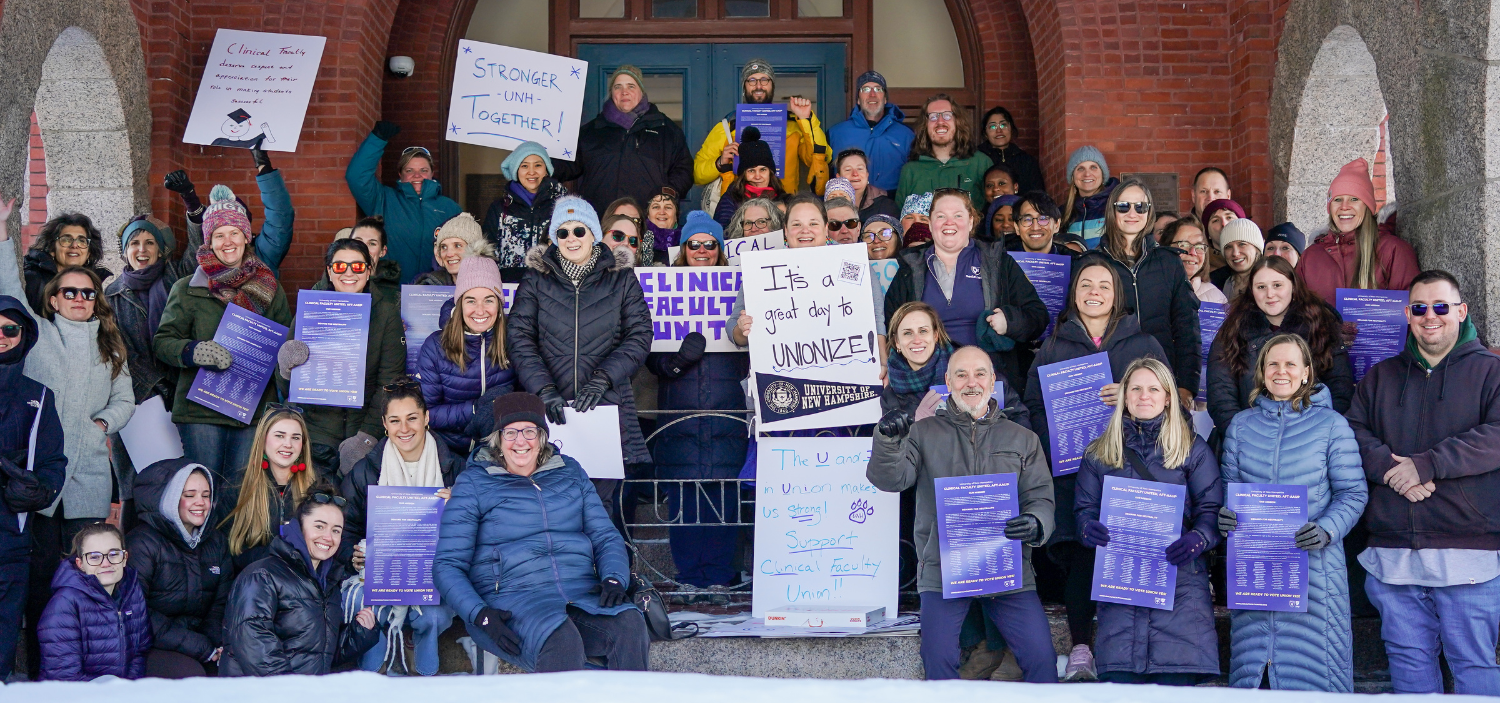
WE ARE CLINICAL FACULTY UNITED
Our Mission
We, the clinical faculty of the University of New Hampshire, stand united to advocate for fairness in workload, compensation, benefits, and equity for every member. We are committed to equality, security, transparency, and shared governance. As a union, we are dedicated to ensuring every clinical faculty member has the support needed to provide high-quality education and training of our students through strengthening the partnership between clinical faculty and the University community.
Demand for Neutrality
We, the undersigned clinical faculty hereby announce that we have formed a union so that we may engage in collective bargaining with UNH over our pay, benefits, workload, and other terms and conditions of employment. Along with the delivery of this notice, we have also submitted the necessary paperwork to prompt a union representation election with the New Hampshire Public Employee Labor Relations Board, and we are committed to voting yes to form our union. We are seeking recognition as a separate bargaining unit that will join and be represented by UNH Lecturers United – AAUP/AFT.
New Hampshire state law establishes our right to form our union and prohibits employers from interfering in this process.
We call on UNH administration to honor the commitment, hard work, and value that clinical faculty provide by respecting our decision to unionize. Attempts to intimidate or divide clinical faculty would be an affront to our capacity to make informed decisions, a waste of resources, and will harm the respectful, collaborative relationship we seek to establish with University leaders. University resources should be focused on our students’ education, and not wasted on expensive anti-union consultants.
- We demand a commitment from the University not to interfere in the election process.
- We also demand that the clinical faculty be formally recognized in the University’s model of shared governance.
- Finally, we demand that the University notifies and bargains with clinical faculty as a union over any proposed changes that might impact our students, our programs, or our careers.
Holly Alperin
Gretchen Arnold
Samantha Arnold
Gretchen Bean
Maggie Begis
Kelsey Boucher
Kimberly Brian
Elizabeth Brock
Gretchen Browne
Jennifer Chadbourne
Cathleen Colleran
Collean Combs
Patricia Cox
April Phelps
Kyle Riding
Kelsy Robinson
Lee Rush
Jessica Bacon
Richard “Will” Lusenhop
Elaine Marhefka
Katherine McCoy
Anne Meginniss
Keri Miloro
Colleen Monahan
Meagan Morgan
Melinda Morrill
David Needle
Katherine Nelson
Alyssa O’Brien
Lisa Owen
Donna Perkins
Dayle Sharp
Inga Sidor
Deborah Simonton
Rae Sonnenmeier
Amy Taetzsch
Christie Davis
Semme Dijkstra
Elizabeth Evans
Joan Glutting
Katherine Godshall
Vanessa Grunkemeyer
Matthew Guy
Elizabeth Harrison
Molly Hayden
Eileen Hollis
Michele Hope
Emily Lusenhop
John Trombley
Aurora Vellante
Lisa Waller
Meredith Young
John Wilcox
Amy McGreevy

“I am joining the union to stand in solidarity with my clinical faculty colleagues. By participating, I aim to strengthen our collective voice in shaping policies that support both educators and students, ensuring that higher education remains equitable, sustainable, and respected.”
April Phelps

“I’m voting YES to joining UNH Clinical Faculty United because I want to recognize the important work that clinical faculty do. We play a vital role in workforce development in the State of New Hampshire!”
Michele Hope
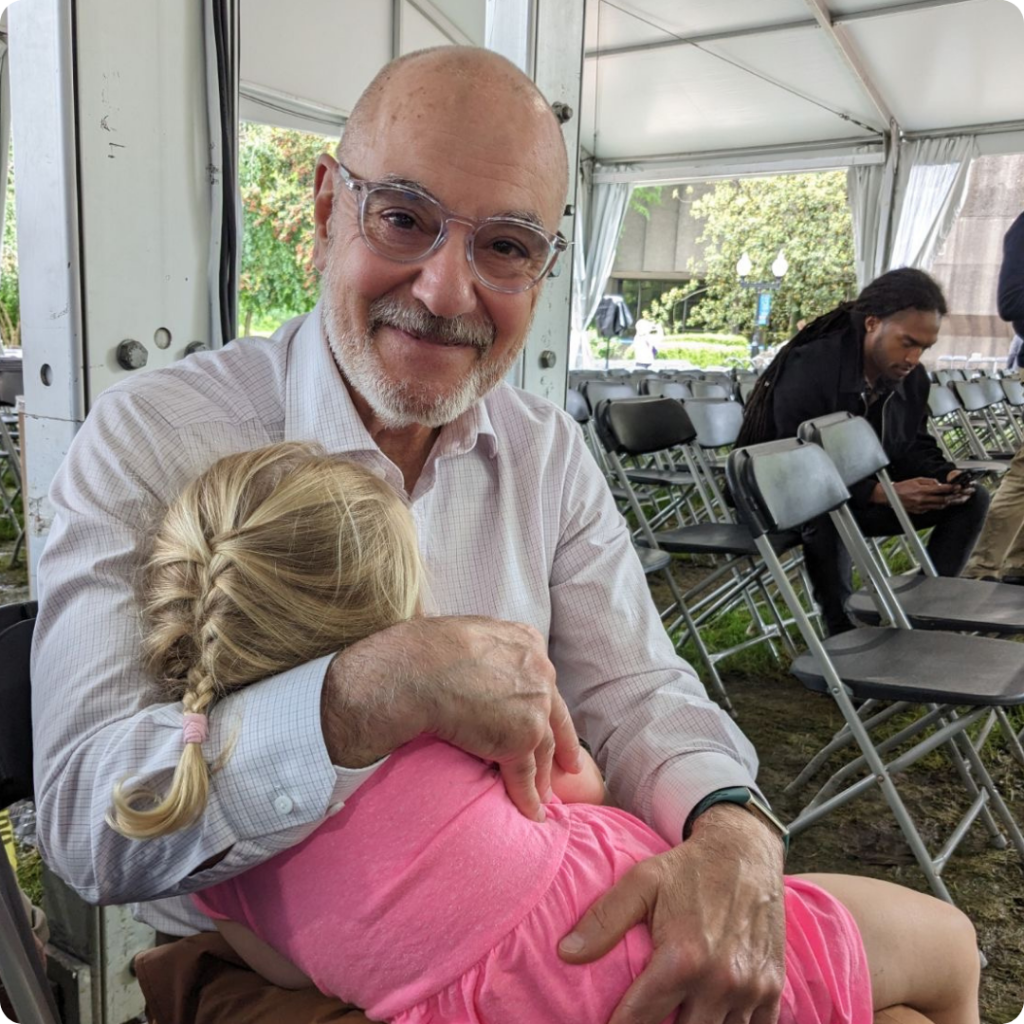
“I support a union because when we stand together, we can have a genuine voice in the decisions that affect our lives and the lives of our loved ones.”
Paul Bonzani

“I’m supporting UNH Clinical Faculty United to ensure all Clinical Faculty are recognized for their value and the contributions they make to the university and our students.”
Dayle Sharp

“Supporting a clinical faculty union means supporting quality education for our students When faculty have fair working conditions and a seat at the table, we can devote our full energy to our students and the communities we serve.”
Meg Morgan

“I am joining for protection during these unpredictable times as all other faculty are unionized.”
Cathleen Colleran

“Clinical faculty play a critical role in student education alongside tenure-track faculty and lecturers, yet they do not have the same protections as other faculty. Over the course of my nearly 30 years at UNH, clinical faculty are frequently asked to take on additional responsibilities for teaching, program direction, and service, often without corresponding adjustments to workload assignments. Clinical teaching is time-intensive. Developing and refining students’ clinical skills requires practice and ongoing feedback. Increasing demands on clinical faculty time in other areas ultimately affect the overall quality of student learning experiences and preparation for clinical roles in the community. In these times of economic uncertainty, it is essential that clinical faculty have clear and equitable expectations regarding workload. For these reasons, I support the formation of a union for UNH’s clinical faculty.”
Rae Sonnenmeier

“I’m proud to stand with our clinical faculty colleagues as they take this important step toward strengthening their voice at UNH. Their work is essential to the university, and they deserve the same protections, respect, and stability that collective bargaining provides. I’m grateful for their courage, and I look forward to welcoming them fully into our union.”
Clark Knowles, President, UNH Lecturers United
Frequently Asked Questions
What does it mean to form a union for UNH clinical faculty?
UNH clinical faculty are coming together to gain greater agency over work-related issues like job security, workload, and pay. By forming a union we gain the right to collective bargaining; making it so that clinical faculty can raise the issues we are most concerned about, administrators are obligated to negotiate with us in good faith over those issues, and agreements that we reach with UNH are recorded and enforced in a contract.
What is a union card? Why are people signing them?
Union authorization cards are forms that workers complete and sign to demonstrate that they support forming a union. These cards are necessary in order to trigger a union election. We only ask you to complete these forms if you are committed to voting yes and to becoming a member of our union. When enough cards have been collected, they are submitted to the New Hampshire Public Employee Labor Relations Board where they will be used to verify that faculty support forming a union, and that an election should be scheduled.
Why should I join the union?
Our strength as a union depends on our being united and standing up for one another. Signing an authorization card and a membership card are the first steps in building a powerful voice for clinical faculty at UNH, and getting administration to listen to us.
Once we win our election and we are certified, only members get to vote on officer elections, on contract ratifications, and only members may hold positions of leadership in the union.
Although there are individual benefits to membership, like access to member-only resources, training, and professional development through AAUP and AFT, the most important benefit is the strength we create when all of us are committed to participating and contributing to our organization.
Why are we joining the lecturers’ union, UNH Lecturers United, AAUP, AFT 6770?
We’re forming our own separate bargaining unit for clinical faculty, but we will be a part of the existing union that represents UNH lecturers: UNH Lecturers United, AAUP, AFT local 6770. Once we have ratified our first contract, clinical faculty will become peers with the lecturers’ group in the same organization. This means that clinical faculty will negotiate our own contract and we will have our own elected leaders and decision-making process, but we will also have access to support and resources from an already-established organization.
Do I have to join the union?
No, union membership is voluntary. However, only members are eligible to participate in union votes (such as contract ratification and leadership elections).
How much are union dues, and what do they cover?
Union dues are 0.75% of our pay. Dues will begin only after we have negotiated our first contract and voted to ratify it. Our dues support the costs of contract negotiations, legal representation, member education, and union operations.
 UNH CLINICAL FACULTY UNITED